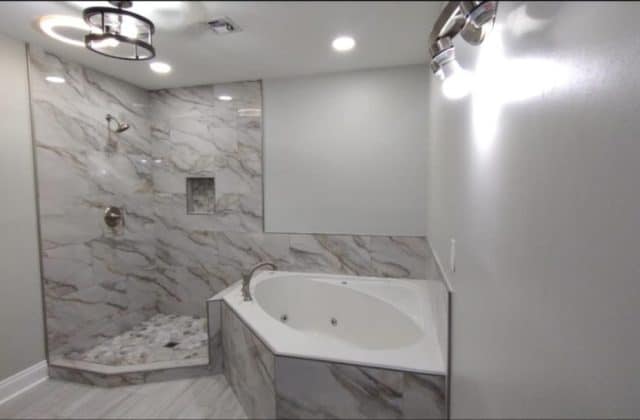

You can update a bathtub without replacing it by refinishing the surface, swapping the faucet and drain trim, redoing caulk and grout, changing the surround or tile, adding a liner, or adding a glass door or panel. Each one fixes a different problem, and none of them repairs structural damage or water behind the wall. Pick the cheapest option that addresses the actual problem, and replace the tub when damage keeps returning.
Replacing a tub is one option among several, and for a tub that is still sound it is rarely the first one to try. Six updates cover most of what homeowners want changed: the finish, the fixtures, the caulk and grout, the walls, a liner, and a glass door or panel. Each one fixes some problems and ignores others, which is why the choice should start with what is actually wrong.
TurnKey Bathtubs works on bathtubs across New Orleans and the surrounding parishes, and the cheapest fix that addresses the real problem is usually the right place to begin. Here is what each update can and cannot do.
Match the update to the problem
| Update | What it can fix | What it cannot fix |
|---|---|---|
| Refinishing | Dull, stained or worn surface; a new color; small chips | A tub that is the wrong size or shape, or water damage behind it |
| Faucet, spout and drain trim | Dated or worn hardware | The tub surface or anything below it |
| Caulk and grout | Gaps and mold-stained seams | A worn tub finish or a wall that has already failed |
| Surround or wall tile | Stained, dated or failing walls | The tub itself |
| Liner | A worn but sound tub that needs a new surface | Moisture or structural problems underneath |
| Glass door or panel | Splash control and the look of a curtain | The condition of the tub |
Two cautions apply to every row. A cosmetic update does not repair what is behind it, and a tub that flexes, leaks or has soft wall material beside it needs its cause found first, not a new surface on top.

Surface updates: refinishing and liners
Refinishing is the lightest way to change how a tub looks. Our bathtub refinishing page describes restoring the shine of an existing tub or changing its color. HomeGuide’s refinishing cost guide (August 19, 2025) lists national prices of $350 to $600 for a standard tub, $400 to $1,400 for a clawfoot tub and $800 to $1,200 for a tub-shower combination, and says the work includes repairing chips or cracks before the new coating goes on. Those are national ranges, not New Orleans prices or a TurnKey Bathtubs quote. The same guide suggests asking a refinisher what the estimate covers, whether color changes cost extra, how soon the tub can be used afterward and what warranty comes with the work.
A liner is the heavier option. It adds a custom shell over the old tub, and HomeGuide’s July 18, 2025 liner guide puts the installed national range at $1,600 to $3,000. The same guide says a liner fixes only cosmetic problems, so a moisture problem before the liner is still there after it, and that the shell is glued down and cannot be removed without damaging the tub underneath. A liner suits a sound tub whose shape you like and whose surface you do not.
Hardware and seals: fixtures, caulk and grout
New handles, a spout and drain trim change what you see and touch, and they are the quickest update on the list. If the tub has a shower, the showerhead is worth a look. The EPA WaterSense page (updated March 3, 2026) says labeled showerheads use no more than 2.0 gallons per minute, against 2.5 for a standard one, and that an average family could save 2,700 gallons a year.
Caulk and grout do more work than they look like they do. Family Handyman’s tub surround guide (updated May 28, 2025) says mold eventually shows up in bathroom caulking and walks through cleaning out the old bead before recaulking. The EPA mold guide (updated February 18, 2026) adds that damp areas like showers are hard to keep completely mold-free, and recommends more ventilation and more frequent cleaning. Our post on regular bathtub maintenance covers that routine, and the one on DIY versus professional repair sorts out which jobs are reasonable to do yourself.
If caulk keeps failing, or tile near the tub is loose or soft, treat it as a sign that water may be getting behind the wall. The same EPA guide says to fix plumbing leaks and other water problems as soon as possible, and to dry water-damaged areas within 24 to 48 hours.

Walls and glass: surround, tile and door
A new surround or fresh tile changes the walls and leaves the tub as it is, so it pairs well with a refinished or sound tub. A glass door or fixed panel replaces a curtain and changes the look of a tub-shower. Neither one does anything for a worn tub surface. If the goal is a calmer, more finished room, the post on creating a spa-like experience with your bathtub has ideas that do not require a new tub.
When replacement wins
An update only helps when the tub underneath is worth keeping. Replacement is the better route when:
- Damage keeps coming back. Cracks, flex or soft spots are covered in the post on six warning signs a bathtub needs professional repair.
- Repairs are stacking up. Our guide to when to replace a bathtub instead of repairing it compares ongoing repairs with a one-time swap.
- Water has reached the wall or floor. A new surface will not dry out a wet wall.
- You want a different size or style. HomeGuide’s August 2025 comparison lists replacement, at $1,500 to $8,000 or more nationally, for major damage, full remodels and changing tub size or style.
Our bathtub replacement page covers that route.
A sensible order of work
The order matters because the options are not equally reversible. Caulk and hardware can be changed again at low cost, while HomeGuide notes that a liner cannot be taken off without damaging the tub.
- Find and fix any leak, and let wet areas dry.
- Redo failed caulk and grout, and swap worn hardware. These are the cheapest and the easiest to undo.
- Refinish the tub if the surface is the problem.
- Add or change a surround, tile or glass once the tub is settled.
- Consider a liner last among the non-replacement options, because it is permanent.
If you are not sure which of these fits your tub, send a message through the contact page or call (504) 666-3779. TurnKey Bathtubs lists free estimates on its site, and a look at the tub in person is the quickest way to tell a surface problem from a structural one.
Frequently Asked Questions
How can I update my bathtub without replacing it?
The main options are refinishing, new faucet and drain trim, fresh caulk and grout, a new surround or tile, a liner, and a glass door or panel. Match the option to the problem: worn surface points to refinishing, dated hardware points to new fixtures, and failed seams point to recaulking.
How much does it cost to refinish a bathtub?
HomeGuide’s national ranges (August 19, 2025) are $350 to $600 for a standard tub and $800 to $1,200 for a tub-shower combination. Those are national figures, not New Orleans prices, so get a written quote for your tub.
Can I change the color of my bathtub without replacing it?
Yes, refinishing can change the color as well as restore the shine. TurnKey Bathtubs’ refinishing page describes both. The surface still has to be sound enough to take the new coating.
Does a new showerhead save water?
A WaterSense labeled showerhead uses no more than 2.0 gallons per minute, compared with 2.5 for a standard one, according to the EPA (page updated March 3, 2026). The EPA says an average family could save 2,700 gallons a year.
Is a bathtub liner a good way to update a tub?
It can be, on a tub that is structurally sound and dry. HomeGuide says a liner fixes only cosmetic problems, so any moisture problem underneath is still there. It is also glued down, and removing it damages the tub beneath.
When is it better to replace the bathtub?
Replacement makes more sense when cracks or flex keep returning, when repairs keep adding up, or when water has reached the wall or floor. HomeGuide also lists replacement for major damage and for changing the tub’s size or style.
Filed under BathTubs